
Enjoying the arts ‘has same effect on ageing as a weekly workout’
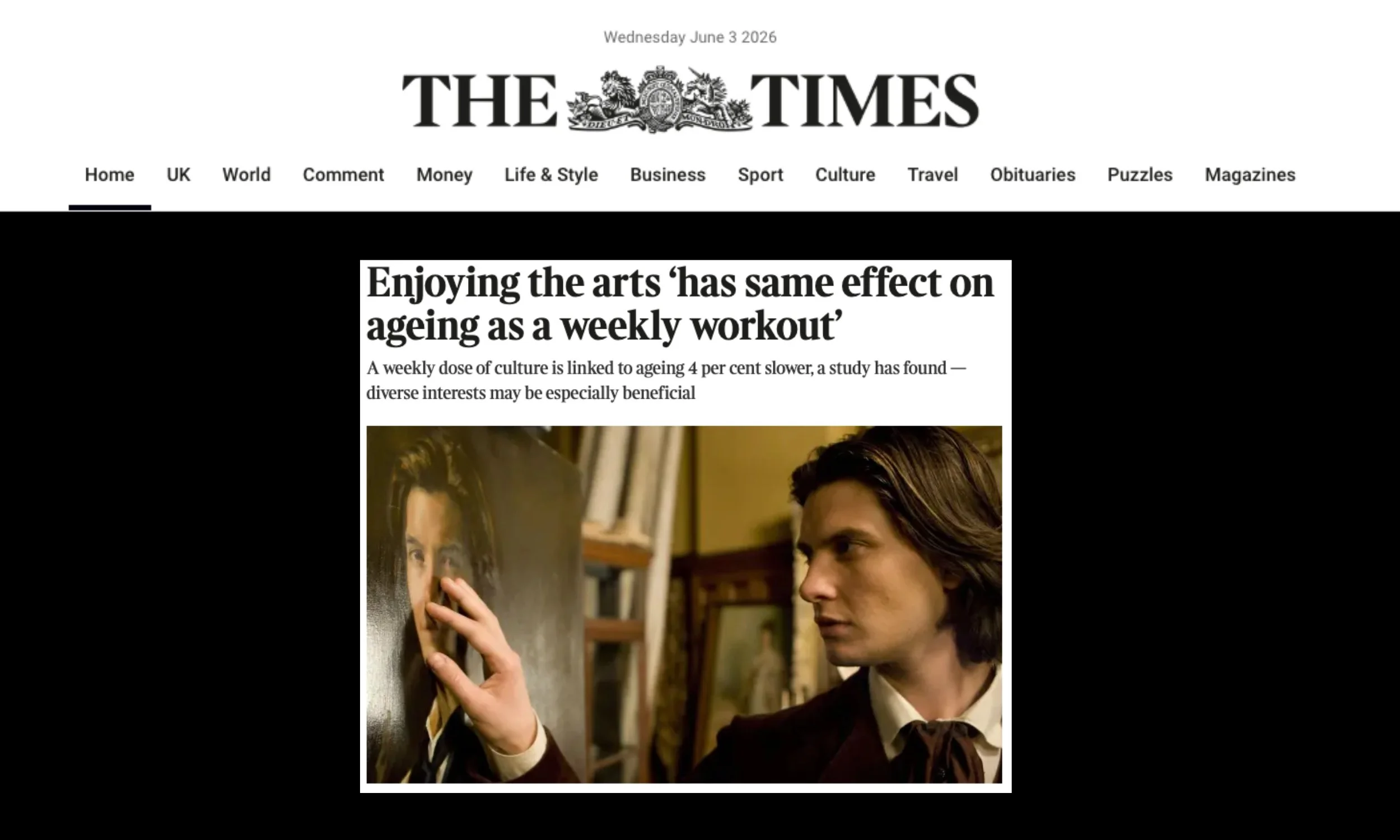
Enjoying the arts ‘has same effect on ageing as a weekly workout’
A weekly dose of culture is linked to ageing 4 per cent slower, a study has found — diverse interests may be especially beneficial.
Scientists have tried all sorts of ways to help us stay youthful — but it could be artists who hold the key.
Immersing yourself regularly in culture may slow down the ageing process as much as an extra weekly workout, a study has found.
Those who engaged in artistic pursuits — whether by taking part, or taking them in — at least once a week were on average a year younger in terms of general health than those who rarely did so, researchers said.
The former group appeared to age up to 4 per cent more slowly than the latter according to the study, which compared the difference to that between those who exercised once a week and those who did none.
Researchers from University College London (UCL) found the benefit was particularly strong among those aged over 40. They concluded: “Those who engaged in arts and cultural activities more frequently, and who engaged in a wider diversity of these activities, appeared to have a slower pace of ageing and a younger biological age, as suggested by changes to DNA.”
The effect remained clear after accounting for other differences, such as body-mass index, smoking levels, education and income.
The study, published in the journal Innovation in Aging, looked at survey and blood test results from 3,556 adults taken from the UK Household Longitudinal Study, which was launched in 2009.
Participants were asked how often they engage in activities such as “singing, dancing, painting, photographing, crafting; attending art exhibitions [and] events; visiting heritage sites [such as] historic parks, historic buildings, monuments; [and] other cultural activities [including] going to museums, libraries or archives”.
The measures of ageing used in the study are called epigenetic clocks. These track the chemical tags that are added to or removed from our DNA to switch genes off or on, in a process known as DNA methylation. This process can change as we get older, enabling scientists to estimate whether a person’s body is in good or poor shape for their age.
The UCL researchers were the first to examine whether the arts have any effect on this phenomenon.
Using one scale, the team found that, when compared with those who engaged with the arts less than three times a year, those who did so at least three times aged 2 per cent more slowly; those who did so monthly aged 3 per cent more slowly; and those who did so weekly aged 4 per cent more slowly.
Using another scale, researchers found that “people who engaged in arts and cultural activities at least weekly were a year younger on average compared to those who rarely engaged”.
Professor Daisy Fancourt, the study’s lead author, from UCL’s Institute of Epidemiology and Health Care, said: “These results demonstrate the health impact of the arts at a biological level. They provide evidence for arts and cultural engagement to be recognised as a health-promoting behaviour in a similar way to exercise.
“Our study also suggests that engaging in a variety of arts activities may be helpful. This may be because each activity has different ‘ingredients’ that help health, such as physical, cognitive, emotional or social stimulation.”
The study noted that “compared to relaxing”, listening to music “upregulates genes” involved in the release of dopamine, the function of our brain’s synapses, and the creation of new nerve cells within the organ itself.
Kaya Burgess, Science Correspondent
Tuesday May 12 2026, 12.03amBST,The Times